
Exterior Walls That Handle Weather
Siding Installation & Repair in Sachse for homes needing replacement after storm damage, material failure, or energy efficiency improvements
Siding failures show up as cracked panels, warped sections that pull away from the wall, faded or chalking surfaces, or visible gaps where water and insects can enter behind the exterior layer. Vanhook installs and repairs siding in Sachse for homeowners replacing outdated or damaged materials, upgrading to more durable products, or addressing storm damage that compromised the home's weather barrier. Vinyl siding remains common for its low maintenance requirements, while fiber cement provides superior impact resistance and holds paint longer in the Texas sun, and wood or engineered wood options deliver specific aesthetic qualities despite requiring more upkeep.
Installation involves removing old siding when necessary, inspecting and repairing underlying sheathing and weather barriers, then fastening new panels with proper overlap and expansion gaps that prevent buckling during temperature swings. Storm-damaged section repairs match existing materials and colors as closely as possible, though color fading means older siding may not match new pieces exactly. Energy-efficient upgrades often include adding insulated backing or improving the weather-resistant barrier beneath the siding.
Schedule a property evaluation to assess current siding condition and discuss material options for your home.
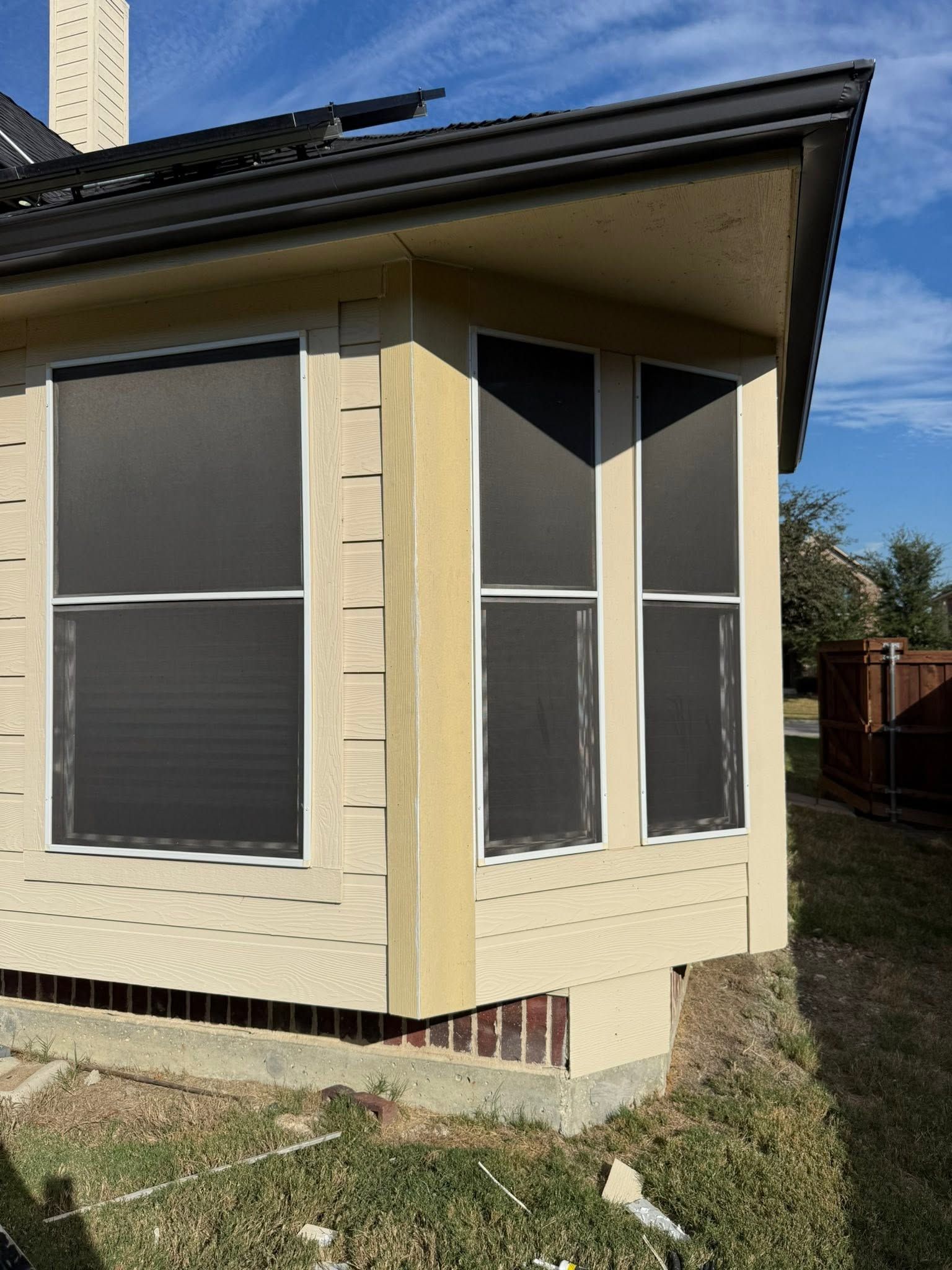
Why Siding Material Selection Matters
Material choice affects durability, maintenance requirements, and long-term appearance differently—vinyl expands and contracts significantly with temperature changes and can crack under impact but never needs painting, fiber cement resists hail and wind damage better while requiring repainting every ten to fifteen years, and wood products offer natural grain patterns but demand regular staining or painting to prevent moisture damage and insect problems. Proper installation matters as much as material quality, since panels fastened too tightly will buckle when heat causes expansion, while insufficient overlap at seams allows water infiltration.
After installation finishes, you see consistent color and texture across the entire exterior, with panels sitting flat against the wall and aligned horizontally or vertically depending on product type. Seams between sections become nearly invisible on quality installations, and corners meet with tight-fitting trim pieces that keep weather out. Energy bills may decrease if insulated siding or improved weather barriers were part of the installation, and exterior maintenance requirements drop significantly when durable materials replace failing originals.
Storm damage repairs sometimes reveal underlying problems like rotted sheathing or inadequate flashing around windows and doors, which need correction before new siding goes up. Insurance claims for hail or wind damage may cover siding replacement on affected walls but not the entire house if other sides show only age-related wear rather than storm impact.
What Property Owners Usually Ask
Sachse homeowners considering siding work want to understand material differences, project duration, and how repairs integrate with existing surfaces.
What happens during siding installation?
Installation begins with removing damaged or old material, inspecting and repairing the underlying structure and weather barrier, then fastening new panels starting from the bottom and working upward, with each course overlapping the one below to shed water effectively.
How do different siding materials compare for durability?
Fiber cement withstands hail impact and resists moisture damage better than vinyl but costs more and requires painting, while vinyl never needs painting and resists rot but can crack under impact and fades gradually under UV exposure.
When should partial replacement happen versus complete re-siding?
Partial replacement works when damage is localized and existing materials are still available in matching colors and styles, while complete re-siding makes sense if materials are discontinued, fade differences will be obvious, or damage is widespread across multiple walls.
What's involved in energy-efficient siding upgrades?
Upgrades typically include replacing or improving the weather-resistant barrier behind the siding, adding insulated backing boards beneath panels, and ensuring all seams and penetrations are properly sealed to reduce air infiltration that drives heating and cooling costs.
How long does siding installation take?
Project duration depends on home size and whether you're replacing all sides or repairing sections, with most complete residential re-siding projects requiring one to two weeks from tear-off through final trim installation.
Vanhook handles siding projects from small storm damage repairs through complete exterior replacements, matching materials when possible or helping you select upgraded products when full replacement makes more sense. Request a detailed estimate based on your home's current exterior condition and your durability priorities.